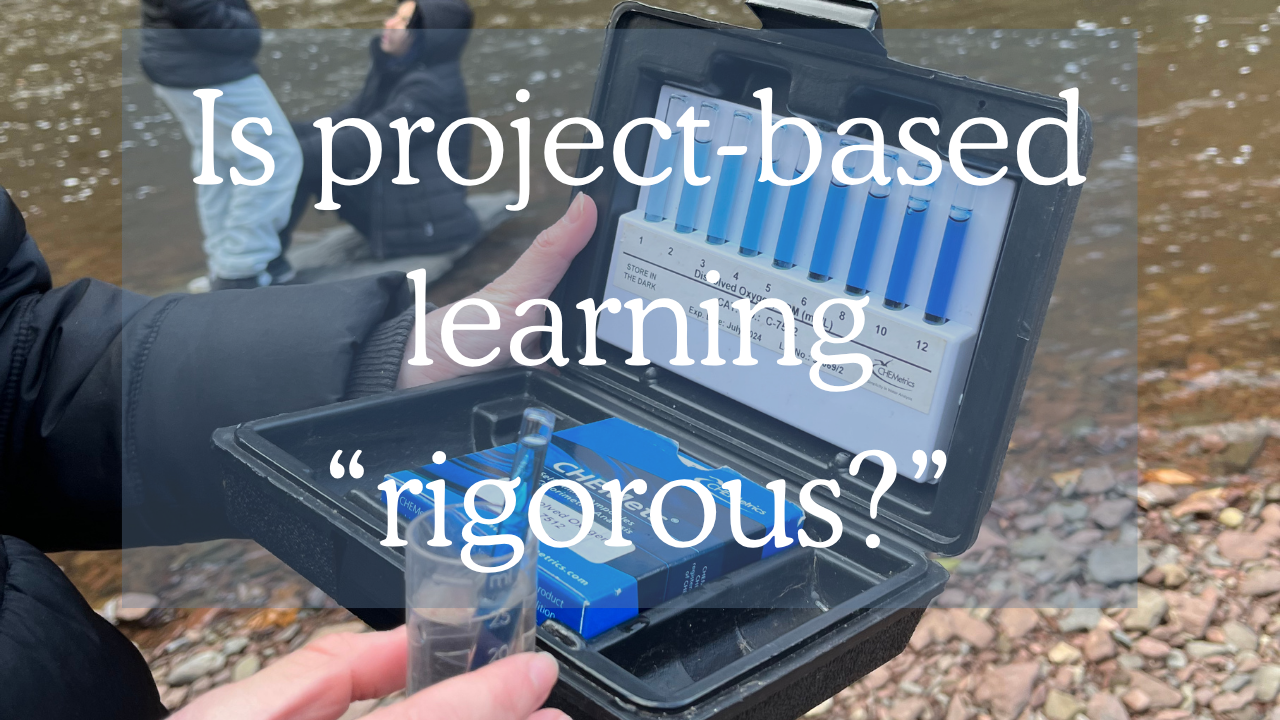
"Well, project-based learning isn't that rigorous"
Aug 17, 2026He said it in passing. Just threw the comment out there to the wind and it caught in my brain like an errant autumn leaf. At first it made me irritated - how rude! This is the style of learning I am championing here, how dare he insult it!
But as I settled and reflected, I realized, if I’m being honest with myself, our projects have NOT always been “academically rigorous.” This has actually been a topic we have wrestled with ourselves: how to increase the rigor in our own home and at Bramblewood.
And what have we learned in the wrestle? Ultimately, that project-based learning can be incredibly rigorous, but we need to be careful we are chasing the right vision of rigor.
We can't be so beholden to the image of academic rigor that we lose real academic rigor. Real mathematicians wonder and play with math. Real scientists are the ones that take a detour to explore an odd result. The world is lamenting the lack of these skills in our rising adults, so, while a broad education is important, creating adults who think deeply and critically, who have place for productive wonder and play, and who can step back and see the big picture or think outside the box - is that not more important? Real rigor has never looked like following a curriculum.
Here are some of the main takeaways we have discovered through seeking rigorous PBL:
- Academic rigor is important, but is not always the point. Especially when we were first starting out, we cared much less about academic rigor and more about the other benefits and skills of project-based learning - figuring out how to work together, communicate, break down a project, work through problems. We were able to get academic rigor in other areas of our homeschool, and having the flexibility to follow the project in pursuit of those skills was the most important thing to us. It was not as academically rigorous as it could have been, but it was socially, collaboratively, and critically thinking-ly rigorous (we make up words here). I still think there is nothing wrong with that - those skills will serve these kids just as well as (if not better than) covering more ground in the “real world!”
- Homeschoolers are in a unique position, and co-ops aren’t schools. Often homeschoolers do a lot of their academics at home, and the purpose of a co-op is enrichment or socialization. PBL is the pinnacle of both enrichment and socialization, and whether or not it is academically rigorous is irrelevant - it serves the intended purpose better than anything else!
- Academic rigor is not only possible with PBL, it can be deeper and richer than other methods. Before long, as we honed those skills and built a culture that supported collaborative work, we intentionally turned ourselves to increasing the academics. To me that was really important. I loved this method of learning for so many other reasons, but could it really teach the “material?” Well, it turns out that when you let kids go deep and do real work, there is so much REAL rigor that is possible! You can actually be MORE academically rigorous than by simply following the steps for a curriculum and checking boxes to complete an education.
Imagine studying genetics, but instead of simply talking about theory, you conduct your own experiment and write and present your findings to experts. Or instead of simply learning the facts about the Revolutionary War to pass a test, you dive into primary sources to tell stories of forgotten voices. Which sounds more academically rigorous to you?
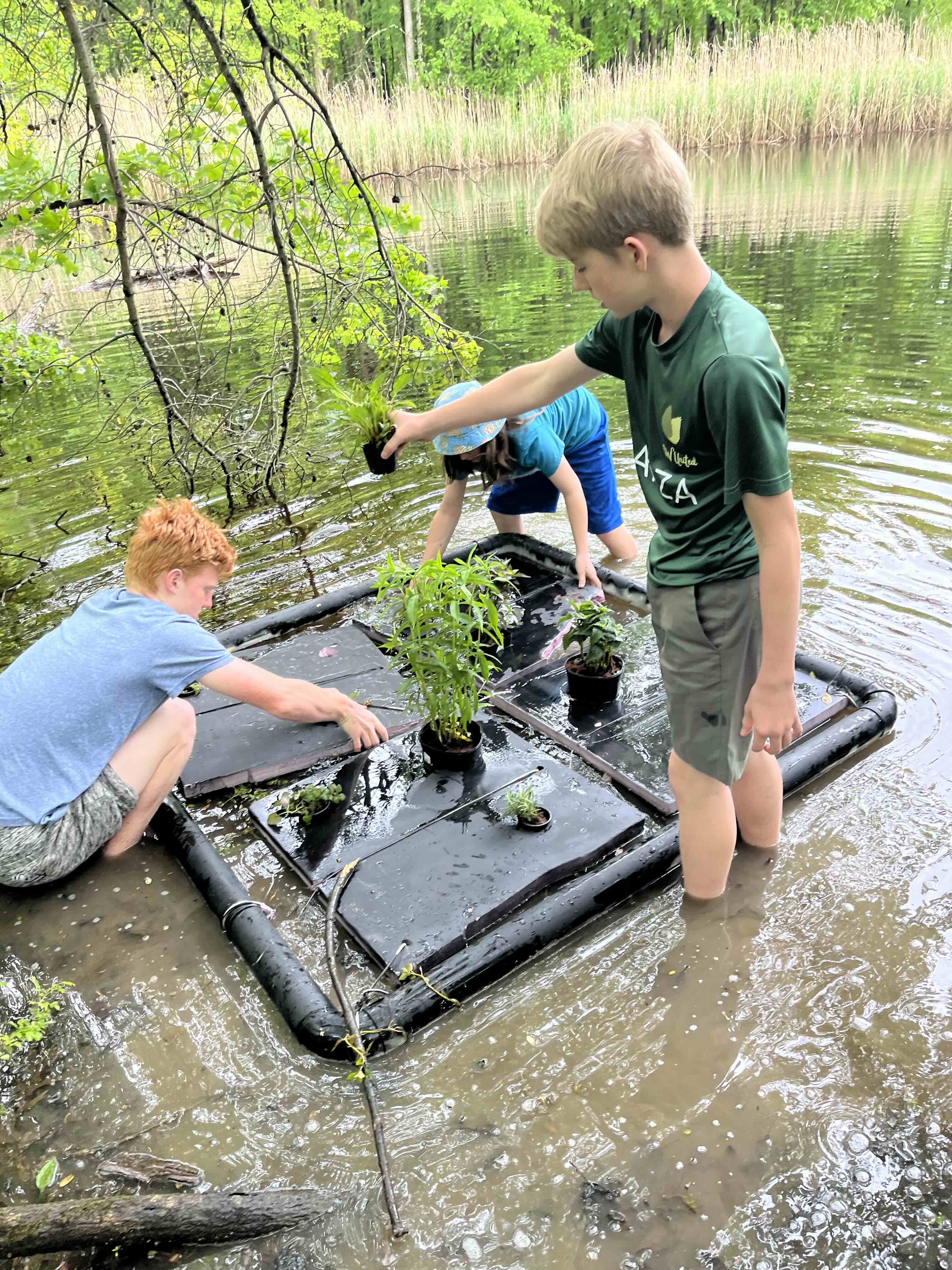
One of the best examples of this was during an environmental science unit with our high schoolers. The project was to help a local pond, so they created an aquaponics raft for it. On the way to doing that, however, they needed to know all about pond health, how to monitor it, how the ecosystem worked around the pond and why all the nutrients mattered. They ended up doing labs and enough of the learning for an AP Environmental course that after a little studying, at least one of the kids went and sat for the exam and did great! They were able to get that academic rigor, but also came away with an incredible experience and accomplishment that would look great on any application or resume!
A few tips, if academic rigor is important to you:
- Academic rigor takes intentionality, so if you are using PBL for your academics, pay attention to setting your culture and in the choice of your project.
- Work to set the tone of your home or co-op such that academics matter - not just to you but to your kids. Becoming people who understand deeply and can converse intelligently on many topics is important and worthwhile.
- Create opportunities where children are naturally rewarded for academic rigor. Presenting to experts, being able to converse with them, and the pride that comes in doing high-level work and being praised by legitimate sources (or offered a job!) is very motivating!
- Complement your PBL with other supportive routines. For us, Socratic discussions, reading great literature, math work (we do use a curriculum for that), and a habit of writing are important pegs in our days. These enhance the projects we do, and we can draw a direct line to how these practices help them do the real work they care about.
- Choose a project that can cover what you need it to. The risk of PBL is that it is deeper than it is wide (not always a problem), so if breadth is important, choose something that will lead to wide need-to-knows. Sometimes, especially for high school if I want it to cover a typical “course,” I will look at a curriculum’s scope and sequence and choose 2-3 projects for the year that will cover it all. The kids still drive the project through their need-to-knows, but they naturally need to know all the things on this scope and sequence to do the project!
We'd love to hear the ways you have increased rigor with your projects! Join the conversation! :)
Don't miss a beat!
New moves, motivation, and classes delivered to your inbox.
We hate SPAM. We will never sell your information, for any reason.